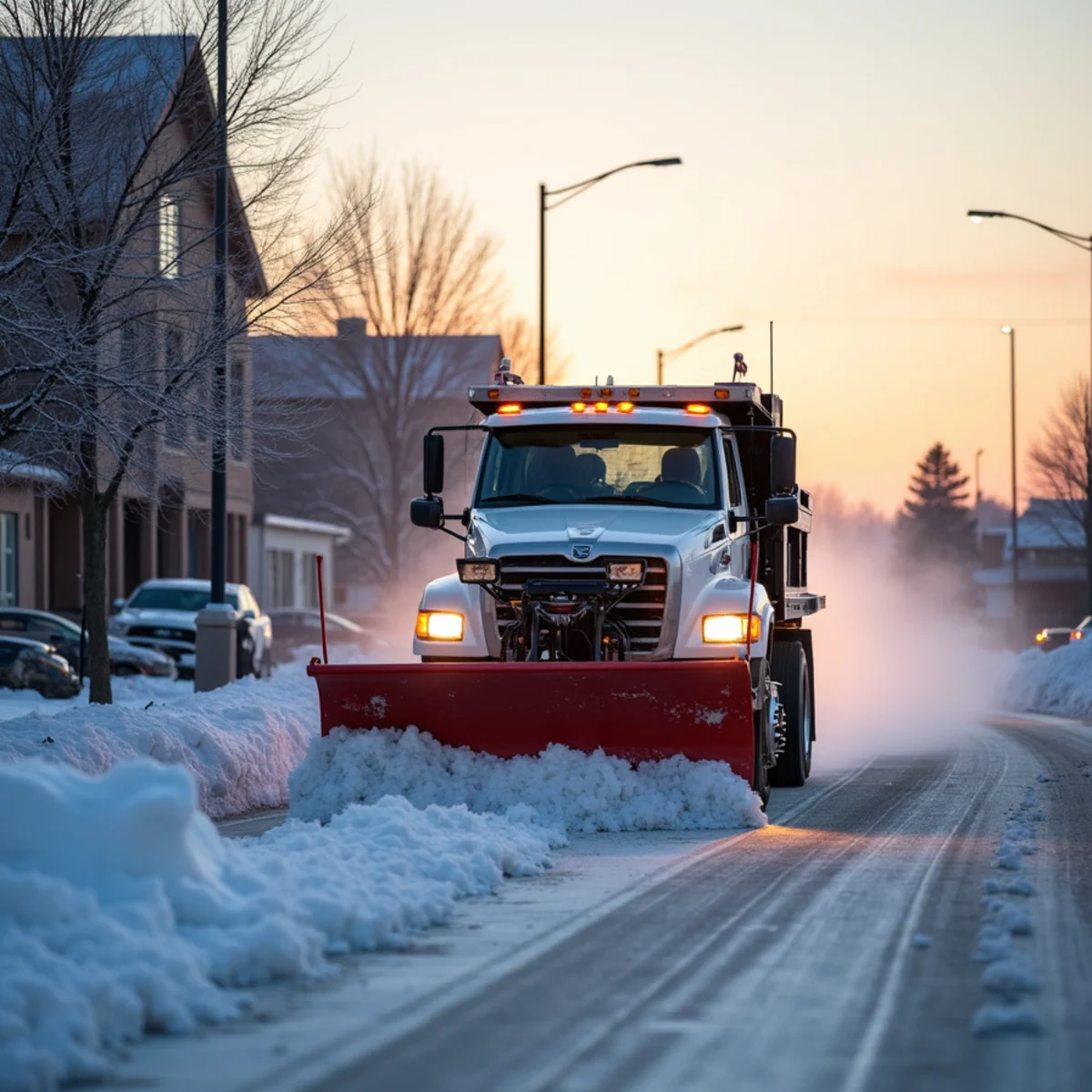
When snow falls overnight in Carson Valley or Reno, every business faces the same morning question: will the lot be clear and safe by the time customers and employees arrive? For property managers and business owners, the answer can't be left to chance. A snowed-in lot is lost revenue; an icy walkway is a slip-and-fall claim waiting to happen.
A professional commercial snow protocol removes that uncertainty. Here's what a real one covers.
Trigger depths and response times
Good commercial snow service starts before the storm with a written agreement: at what snow depth does the crew mobilize, and how fast will they respond? A defined trigger depth (say, two inches) and a committed response window mean you're never wondering whether anyone is coming.
This is the backbone of managing liability. When your protocol is documented and consistent, you have a defensible record that the property was maintained to a standard.
Plowing, shoveling, and priority areas
Clearing a commercial property is more than pushing snow off the lot. Walkways, entries, ADA-accessible routes and parking, and fire lanes all have to be cleared and kept clear — these are the highest-liability areas and the ones inspectors and claims focus on.
Snow also has to be piled where it won't block parking, sightlines, or drainage, and where meltwater won't refreeze across a travel path.
Salting and deicing to stop refreeze
Plowing alone often leaves a thin, compacted layer that melts and refreezes into black ice — arguably more dangerous than the snow itself. That's why salting and deicing walkways, entries, and problem areas is part of any serious protocol, applied on a schedule that keeps surfaces safe between passes.
For multi-day storms, the crew returns as accumulation warrants so the property stays open the entire event, not just once at 5 a.m.
One reliable partner all winter
The value of a seasonal contract is reliability: the same crew, a known protocol, priority response, and documentation you can hand to your own risk manager. You stop scrambling for a plow after every storm.
Pacheco Enterprises LLC builds commercial snow and ice contracts for retail centers, offices, and HOAs across Carson City and Reno. Call (323) 606-0255 to set up a plan before the next storm.
Pro insight: why the plan matters more than the plow
The difference between a commercial lot that stays open and one that becomes a liability isn't horsepower — it's the protocol agreed on before the first flake. We set a written trigger depth and response window with every commercial account so nobody is guessing at 5 a.m. whether a crew is coming.
The second half is documentation. A dated record of when the lot was serviced and what was applied is your best defense if a slip-and-fall claim ever lands. We build that record in as routine, because 'we plowed it' and 'the surfaces were documented safe' are very different positions to be in.
- Agree on a trigger depth and response window in writing before winter
- Prioritize entries, ADA routes, and fire lanes — the highest-liability areas
- Salt and deice to stop the melt-refreeze that becomes black ice
- Keep dated service records for your risk file
The bottom line
For a business, snow response is risk management. A written trigger depth, a committed response window, consistent salting, and dated records turn winter from a scramble into a managed, defensible process.
Pacheco Enterprises LLC builds seasonal snow and ice contracts for retail centers, offices, and HOAs across Carson City and Reno, with the documentation your risk file needs. Call (323) 606-0255 to set up a plan before the next storm.
Frequently Asked Questions
Many Carson Valley and Reno accounts set a two-inch trigger, but it depends on your property, traffic, and risk tolerance. We define it with you in the contract so response is automatic.
Yes. Plowing alone often leaves a thin layer that refreezes into black ice. We salt and deice walkways, entries, and problem areas to keep surfaces safe between passes.
We can. We build seasonal contracts across multiple sites with consistent protocols and unified documentation. Call (323) 606-0255 to set it up.
Related services & areas