Northern Nevada wind is in a category of its own. The Washoe Zephyr and the down-canyon gusts off the Sierra can top serious speeds, snapping limbs, throwing debris, and flattening fences in a single afternoon. When the wind finally dies down and you step outside to a mess, knowing what to handle yourself — and what to leave alone — keeps you safe.
Here's how to work through wind damage the right way.
Check for hazards before you touch anything
Before you start dragging branches, look up and look around. Downed or sagging power lines are a lethal hazard — stay far away and report them. Scan for 'widow-makers': broken limbs hung up in a tree that haven't fallen yet. And check whether any leaning tree or damaged structure is under load and could shift.
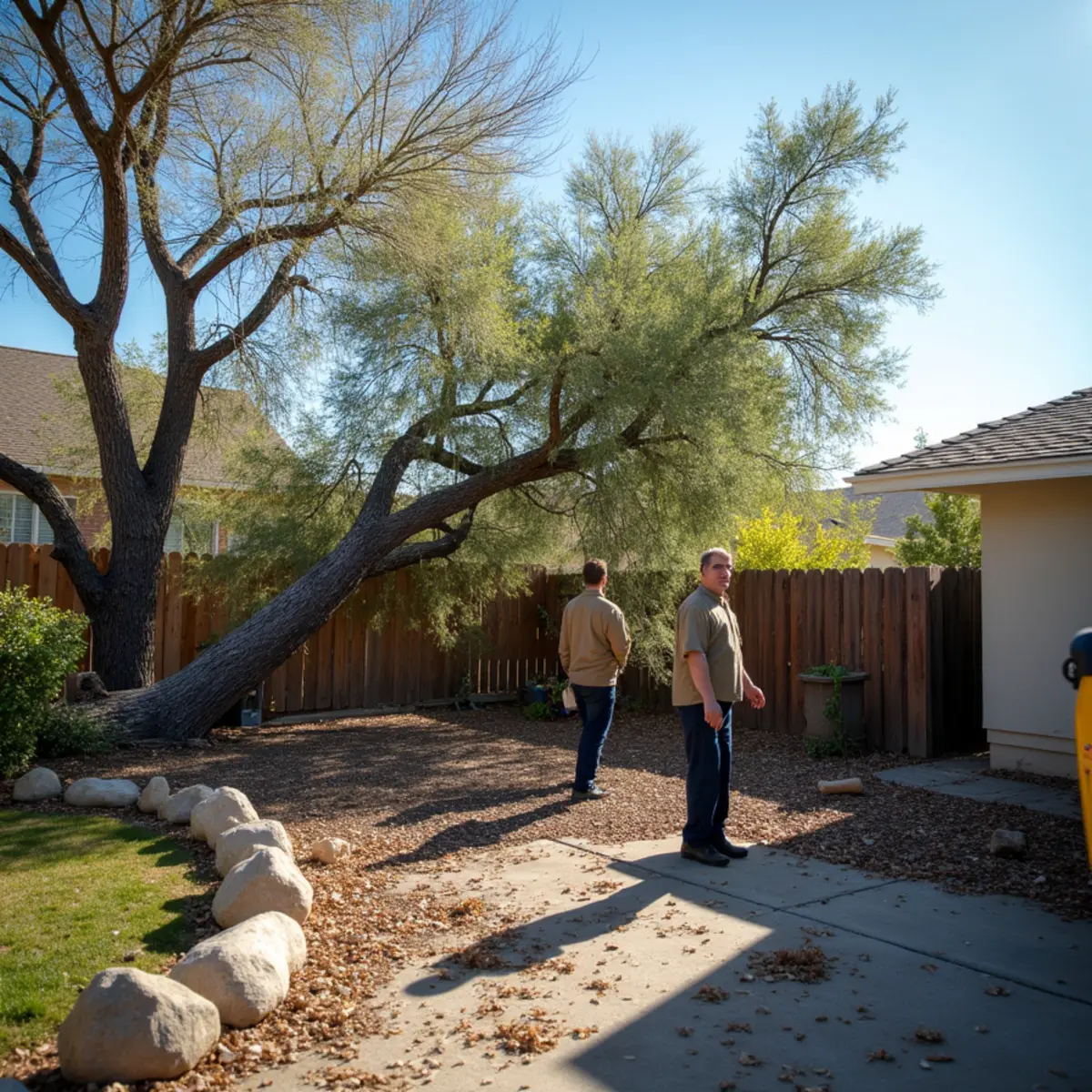
If a tree is resting on your roof, a fence, or a vehicle, don't try to free it. Compromised trees release their stored tension unpredictably when you start cutting, which is how serious injuries happen.
What you can safely clean up
Small, loose branches and scattered debris on the ground are usually safe to gather and stack for removal. Clear walkways and driveways so you can move around the property, and pick up anything that could become a projectile in the next gust.
Rake up the litter along fences and structures — in fire country, that dry debris is also a fuel hazard you'll want gone, not piled in a corner.
When to call for emergency help
Call a professional for anything involving a downed or damaged tree, limbs under tension, debris on a structure, or blocked access you can't safely clear. These are the situations where the right equipment and experience prevent a bad day from getting worse.
Pacheco Enterprises LLC offers 24/7 emergency storm damage cleanup and fallen tree removal across Carson City, Gardnerville, and Northern Nevada. One crew clears the branches, removes the downed tree, handles damaged fencing, and hauls it all away. Call (323) 606-0255.
Documenting damage for insurance
Before cleanup gets too far along, photograph the damage — especially anything involving a structure. Homeowner policies often cover tree removal after a covered wind event, particularly when a structure is affected, so good documentation helps your claim.
A reputable cleanup crew can document the work performed, which supports the claim and gives you a clear record of what was done.
Pro insight: the hazards people miss after the wind stops
The most dangerous part of wind-damage cleanup isn't the debris on the ground — it's what's still hanging. After a Washoe Zephyr event we always look up first for cracked limbs lodged in a canopy that haven't fallen yet. Those 'widow-makers' drop without warning, often onto the exact spot someone is raking.
The second overlooked hazard is loading. A leaning tree or a limb pinned under tension stores energy; cut it in the wrong place and it whips. That judgment — where to relieve the load safely — is the real skill in storm work, and it's why a compromised tree on a structure is never a DIY job.
- Scan the canopy for hung-up, cracked limbs before touching the ground debris
- Stay far away from any downed or sagging power line and report it
- Don't cut a tree that's on a roof, fence, or under tension yourself
- Photograph structural damage before cleanup for your insurance claim
The bottom line
Northern Nevada wind drops limbs and flattens fences fast, but the aftermath rewards patience: look up for hung-up limbs, stay clear of power lines, and leave anything under tension or on a structure to a crew with the right equipment.
When you need the yard cleared and made safe again, Pacheco Enterprises LLC offers 24/7 storm and tree response across Carson City and Gardnerville — one crew for the branches, the downed tree, and the haul-off. Call (323) 606-0255.
Frequently Asked Questions
We run a 24/7 line and prioritize blocked access and anything unsafe. Call (323) 606-0255 and we'll dispatch as conditions allow, clearing driveways and entries first.
Yes. One crew clears scattered debris, removes downed trees and hazardous limbs, flags fence or structure damage, and hauls everything off.
Tree and debris work is often covered when a covered event caused damage to a structure. We document the work to support your claim; check your specific policy for limits.
Related services & areas