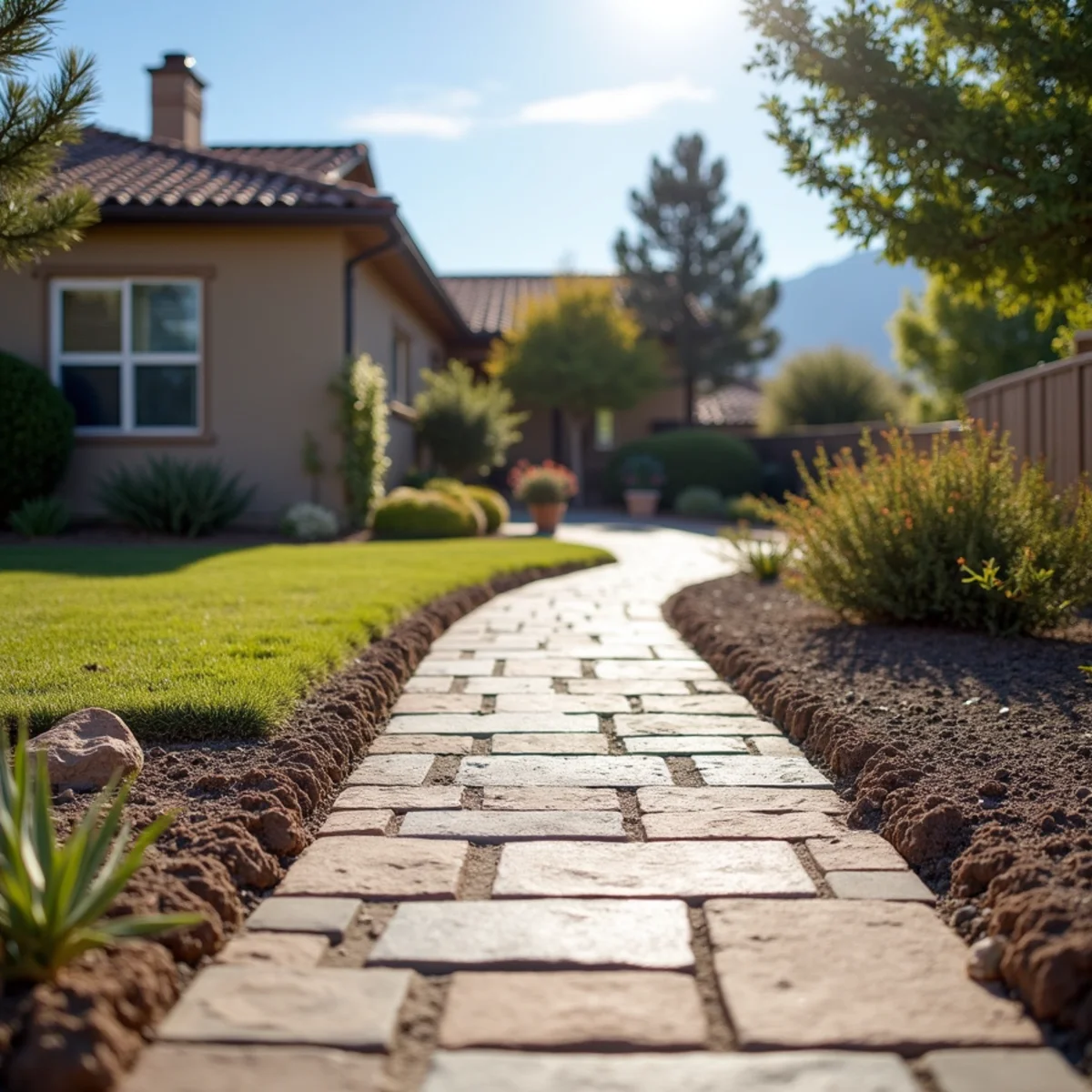
You paid for a paver walkway or patio, and within a couple of seasons it's developed dips, low spots, and pavers that rock underfoot. Frustrating — and almost always avoidable. Sunken pavers are rarely a problem with the pavers themselves. They're a symptom of what's underneath.
Here's why it happens, especially on Northern Nevada's sandy and decomposed-granite soils, and what a lasting fix looks like.
The base was never built to last
A durable paver surface sits on a deep, properly compacted road-base foundation topped with a thin, screeded bedding layer. When installers skip base depth or don't compact in lifts, the base consolidates unevenly under load and weather — and the pavers follow it down. On our decomposed granite and sandy soils, which move and drain differently than clay, an under-built base settles fast.
If your pavers were laid on a thin layer of sand over native soil with little or no compacted base, sinking was only a matter of time.
Water is finishing the job
Poor drainage accelerates everything. Water that isn't directed away washes fines out of the base, undermines edges, and — in winter — freezes and heaves the surface unevenly. Add missing or failed edge restraint, and the field of pavers spreads outward, opening joints and dropping low.
So a sunken walkway usually has two culprits working together: an inadequate base and water that has nowhere good to go.
The right fix
Repairing sunken pavers properly means lifting the affected pavers, correcting the base — adding and compacting the right aggregate to the correct depth, fixing grade so water drains away — re-screeding the bedding, resetting the pavers to a true plane, and locking the joints with polymeric sand. Where edge restraint failed, it gets reinstalled so the field can't creep again.
Because pavers are modular, a good repair is often localized rather than a full rebuild — one of the underrated advantages of pavers over a cracked concrete slab.
Build it right the first time
The cheapest paver job is the one you don't have to redo. A correctly excavated, deeply compacted base with proper drainage and edge restraint stays flat and level for decades in our climate.
Pacheco Enterprises LLC installs and repairs paver patios, walkways, and driveways across Dayton, Gardnerville Ranchos, and the Carson region — built on a base that holds. Call (323) 606-0255.
Pro insight: why localized repairs usually win
Because pavers are modular, a sunken section is often a targeted fix rather than a full tear-out — one of their biggest advantages over a cracked concrete slab. We lift the affected pavers, correct and recompact the base to the right depth, fix the grade so water drains away, re-screed, and reset the pavers to a true plane.
The one time a localized repair won't hold is when the whole install skipped a real base. If the pavers were laid on a thin sand layer over native decomposed granite, the sinking will keep migrating, and rebuilding on a proper compacted base is the honest recommendation.
- Lift the sunken pavers and inspect the base depth
- Add and compact the correct road-base aggregate to depth
- Correct grade so water drains away from the area
- Re-screed, reset pavers level, and re-lock joints with polymeric sand
The bottom line
Sunken pavers are a base problem, not a paver problem — and because pavers are modular, the fix is often localized rather than a full rebuild, provided the original install had a real base to correct.
Pacheco Enterprises LLC repairs and installs paver patios, walkways, and driveways across Dayton, Gardnerville Ranchos, and the Carson region, built on a compacted base that holds flat through freeze-thaw. Call (323) 606-0255.
Frequently Asked Questions
Usually yes. Pavers are modular, so we can lift the affected area, correct the base and grade, and reset them level — often without rebuilding the whole surface.
Sandy and decomposed-granite soils shift and drain differently than clay. Without a deep, compacted road-base foundation, they consolidate unevenly and the pavers follow them down.
Not if the base is corrected properly. We recompact to the right depth, fix drainage, and reinstall edge restraint so the field can't creep or settle again.
Related services & areas