The burst irrigation lines that flood Carson City yards every spring almost all share one cause: water left in the system over winter. When it freezes, it expands and cracks pipe, valves, and backflow devices. The fix is prevention — a proper fall blowout that clears water from the lines before the first hard freeze. Here's how the protocol works and why it matters at our elevation.
Why winterization is essential here
Northern Nevada winters bring hard, repeated freezes, and irrigation components are full of water that has nowhere to go when it turns to ice. Rigid pipe splits, fittings crack, valves fail, and backflow assemblies — often the most expensive parts — can be destroyed. A blowout removes the water so there's nothing to freeze.
Skipping winterization is one of the most expensive false economies in landscaping. A blowout is inexpensive; the spring repairs are not.
The blowout protocol, step by step
Proper air volume and pressure are critical — an undersized compressor won't clear the lines, and too much pressure can crack fittings and damage heads. This is where doing it right, or having it done right, pays off.
- Shut off the irrigation water supply at the main valve
- Protect and, where appropriate, insulate the backflow device and any exposed components
- Connect an air compressor sized correctly for the system (too much pressure damages components)
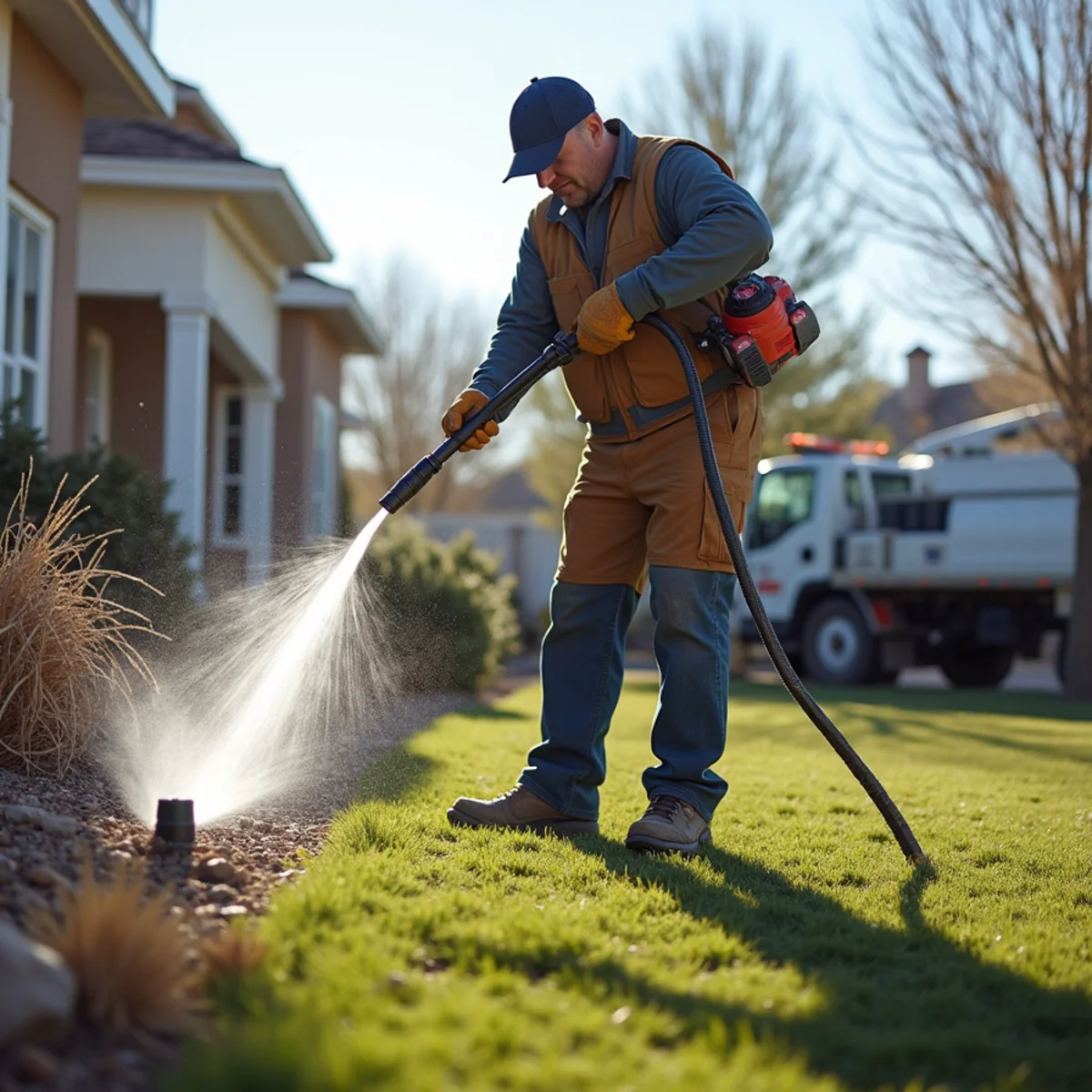
- Working zone by zone, blow compressed air through each until the heads or emitters expel their water and run dry
- Cycle through every zone, confirm lines are clear, and shut the controller down for the season
Timing it right
The goal is to winterize after the growing season but before the first hard freeze. In the Carson City area and colder outlying valleys, that window is typically mid-to-late fall. Wait too long and a surprise cold snap can crack a line before you've cleared it.
If you have drip zones, they need clearing too — small emitters and tubing are just as vulnerable to freeze damage.
Set spring up for success
A properly winterized system starts spring dry and ready instead of flooded and broken. It's the difference between a quick startup and an emergency repair call.
Pacheco Enterprises LLC performs irrigation winterization blowouts across Carson City and Elko country. Call (323) 606-0255 to get on the fall schedule before the freeze.
Pro insight: the compressor, not the calendar, does the work
Homeowners often ask us for the 'winterization date,' but the number that actually matters is air volume, not the day on the calendar. Too small a compressor won't push the water out of the lines; too much pressure cracks fittings and blows out heads. Matching the compressor to the system is the whole skill in a proper blowout.
The timing rule is simpler: after the growing season but before the first hard freeze — mid-to-late fall in the Carson City area and colder outlying valleys. And don't forget the drip zones; small emitters and tubing are just as vulnerable to a freeze as the mainline.
- Match compressor air volume to the system — undersized won't clear it
- Keep pressure in range so fittings and heads aren't damaged
- Winterize after the season but before the first hard freeze
- Clear drip zones too, not just spray heads
The bottom line
A proper blowout is cheap insurance against a spring full of burst lines. Match the compressor to the system, clear every zone including drip, and time it after the season but before the first hard freeze.
Pacheco Enterprises LLC performs irrigation winterization across Carson City and Elko country — call (323) 606-0255 to get on the fall schedule before the freeze.
Frequently Asked Questions
Gravity leaves water trapped in low spots, valves, and backflow devices — exactly where a freeze cracks components. A compressed-air blowout clears the lines so there's nothing left to freeze and expand.
After the growing season and before the first hard freeze — typically mid-to-late fall. Wait too long and a surprise cold snap can crack a line before it's cleared.
Trapped water freezes and cracks pipe, valves, and backflow assemblies, which then fail when the system is pressurized in spring. A blowout is far cheaper than the repairs it prevents.
Related services & areas