In Carson City and Washoe Valley, a fence has to survive the Washoe Zephyr — the strong, sustained wind that funnels down out of the Sierra. Homeowners often ask which fence material is 'the best for wind,' but the honest answer starts with a truth about installation: even the toughest material fails on shallow, poorly set posts. Once the posts are right, each material has real trade-offs.
Here's how wood, vinyl, and chain-link actually compare for our conditions.
The wind truth: it's mostly the posts
Fences fail at the posts far more often than at the panels. In windy, freeze-prone areas, posts need to be set deep, in concrete, and spaced appropriately for the wind load — closer spacing for taller privacy fences and exposed sites. Get that wrong and the fence leans or comes down regardless of material.
So the first question isn't 'wood or vinyl,' it's 'who's setting the posts, and how.' That's where a fence's wind survival is won or lost.
Wood
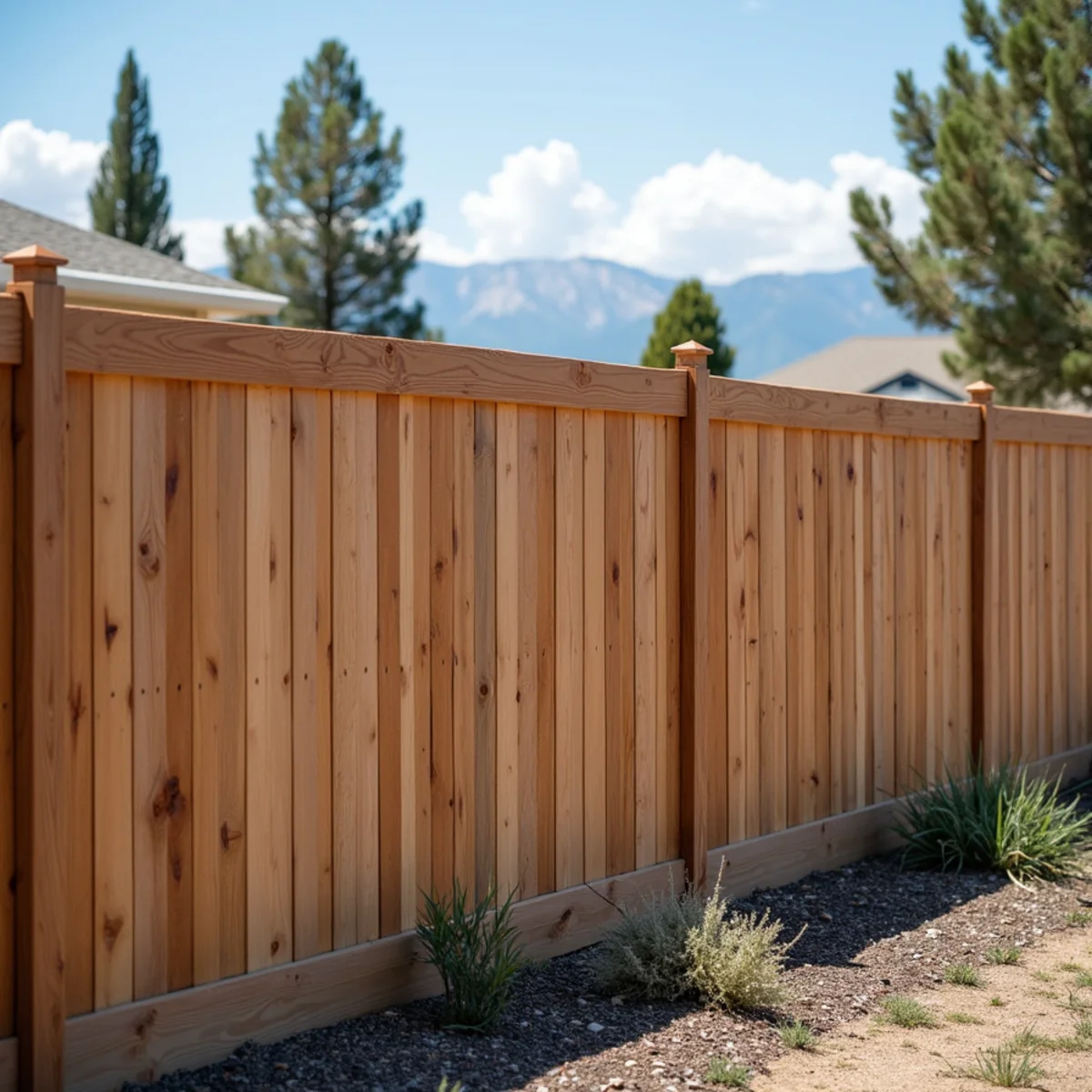
Wood gives warmth, full privacy, and a classic look, and it can be built solid. The trade-offs: solid wood privacy fences present a large sail area to the wind, so they demand excellent post work, and the dry, UV-heavy high-desert climate weathers wood — periodic sealing extends its life. A well-built wood fence with staggered or spaced boards can also relieve some wind pressure.
Vinyl
Vinyl is low-maintenance — no painting or sealing — and shrugs off sun and moisture, which makes it popular here. Quality vinyl systems handle wind well when installed with proper post depth and reinforcement, though cheap panels installed poorly can crack or blow out. For a clean, durable, hands-off privacy fence, well-installed vinyl is hard to beat.
Chain-link
Chain-link is the value champion and the best wind performer in one sense: the open mesh lets wind pass straight through, so there's little sail area to catch a gust. It's ideal for security, pet containment, and livestock, and privacy slats can be added — though slats reintroduce wind load. If privacy isn't the priority, chain-link is durable, affordable, and wind-friendly.
The right choice depends on your goals, budget, and exposure. Pacheco Enterprises LLC installs and repairs all three across Carson City and Washoe Valley, with posts set for real Nevada wind. Call (323) 606-0255 for a quote.
Pro insight: the post is the fence
We've replaced enough wind-toppled fences around Carson City and Washoe Valley to say it plainly: the material barely matters compared to the posts. A beautiful cedar privacy fence on shallow posts is the next casualty of a spring Zephyr; a plain fence on deep, concrete-set, correctly spaced posts rides out the same gust.
So when you compare fence quotes, compare post depth and spacing before you compare pickets. In exposed, windy areas we set posts deeper and closer together — and for solid privacy fences, which catch the most wind, that upgrade is the difference between a fence that lasts and one that leans.
- Ask how deep posts are set and whether they're in concrete
- Confirm tighter post spacing on tall privacy fences and exposed sites
- Wood: full privacy, needs periodic sealing in our UV-heavy sun
- Vinyl: low-maintenance; chain-link: best value and best wind pass-through
The bottom line
Choose the material for your goal — privacy, low maintenance, or value — but choose the installer for the posts, because that's what survives the Zephyr. Deep, concrete-set, correctly spaced posts matter more than the pickets they carry.
Pacheco Enterprises LLC installs and repairs wood, vinyl, and chain-link fencing across Carson City and Washoe Valley, with posts set for real Nevada wind. Call (323) 606-0255 for a quote.
Frequently Asked Questions
Any material lasts when the posts are set deep, in concrete, and spaced for wind. Among materials, quality vinyl and well-built wood handle wind well; chain-link's open mesh sheds wind best but offers no privacy.
Below the frost line and in concrete, going deeper for tall privacy fences and exposed lots. Shallow posts are the number-one reason fences fail in Northern Nevada.
Vinyl needs no painting or sealing and shrugs off sun and moisture; wood gives a classic look but needs periodic sealing. Both work well on proper posts — it comes down to maintenance preference and budget.
Related services & areas